


Who is more likely to get alzheimer’s male or female? You must have heard about the differences in Alzheimer’s in older men and women, this is true and women are more susceptible to this disease. Alzheimer’s disease, the most common type of dementia, has a gradual onset and progressive course that affects memory and other mental abilities, such as thinking, reasoning, and judgment. It’s estimated that there are about 600,000 people with Alzheimer’s disease.
Alzheimer’s is the fifth leading cause of death in people over the age of 65 in the United States, and more than 5 million Americans now have the disease, two-thirds of whom are women. That number is expected to rise in the coming years. In addition to the costs of care, hardship, and death that come with the disease, the significant impact Alzheimer’s has on women’s lives has also received much attention recently. In this article from humanhealthmag, we intend to explain the differences between this disease in women and men and to explain ways to prevent it.
Why Do Women Get Alzheimer’s More Than Men?
By studying the differences in Alzheimer’s in older men and women, we find that the number of women who suffer from Alzheimer’s is higher than that of men. According to a recent study, 3.4 million women over the age of 65 have the disease, compared to 1.8 million men.
Since one of the most important factors for Alzheimer’s disease is aging, researchers believe that women have a higher life expectancy than men. As a result, the number of women who reach the age of 65 and Alzheimer’s is more common among them. According to the latest statistics, the life expectancy of both women and men in the United States is 80 years, but on average, women live three years longer than men. Fortunately, by knowing the signs of Alzheimer’s in women, you can prevent this disease.
Most Important Differences in Alzheimer’s in Older Men and Women
Women are physically and lifestyle-wise different from men in most cases, which in itself will affect the development of Alzheimer’s disease. Most research proves the differences in Alzheimer’s in older men and women. Of course, with the advancement of science, early Alzheimer’s test can prevent this disease to a large extent. Some studies have compared factors such as education level, lifestyle and the different impact of stress on women and men. In addition to all these, hormonal differences are also known to be one of the most important factors in the difference in the development of Alzheimer’s disease.

Research shows that the hormone estrogen can have great effects on the prevention of Alzheimer’s. Other factors include:
- Strengthening synapses: A synapse is a compound that allows cells to communicate with each other.
- Strengthening cerebral blood flow and glucose metabolism
- Improving choline acetyltransferase function: This enzyme is effective in the synthesis of acetylcholine, one of the most important chemical compounds in the brain, and plays an important role in the communication of nerve cells.
- Reducing the effects of beta amyloid: One of the causes of Alzheimer’s disease is the accumulation of beta amyloid between nerve cells in the brain.
- Preventing mitochondrial damage
Of course, starting treatment with estrogen hormone and how old the patient is are very important. The disease may worsen in those who undergo this method between the ages of 65 and 79. There are many ways to prevent this problem, and one of them is to prevent Alzheimer’s with aerobic exercise.
The Effects of Women’s Caregiving Role
As we mentioned earlier, according to the differences in Alzheimer’s in older men and women, three out of five people who develop Alzheimer’s are cared for by women, which, according to new research, also affects their health. A study conducted in 2010 showed that almost half of those responsible for caring for these patients experience high levels of stress.
Caring for patients with Alzheimer’s is more risky and often requires 24 hours of continuous time per week. Depression and stress, which are important factors in the development of Alzheimer’s in middle age, are very common among those who are responsible for caring for these patients. By following the diet for Alzheimer’s patients, can stopped the progression of the disease.
Differences in Alzheimer’s in Older Men and Women in Symptoms
differences in Alzheimer’s in older men and women also have different symptoms. Some research has shown that women may experience some features and symptoms more specifically, which may be due to the influence of hormones, brain structure and other factors. A 65-year-old man has an average 6.3 percent lifetime risk of developing Alzheimer’s disease, while the risk for a 65-year-old woman is 12 percent, almost twice as high.
One way that gender affects the risk of the disease is through the male hormone testosterone. Some testosterone is converted to estrogen, and estrogen appears to protect healthy brain cells. Older men do not experience the sharp decline in estrogen levels that women experience after menopause, and this may reduce the risk of AD in men.
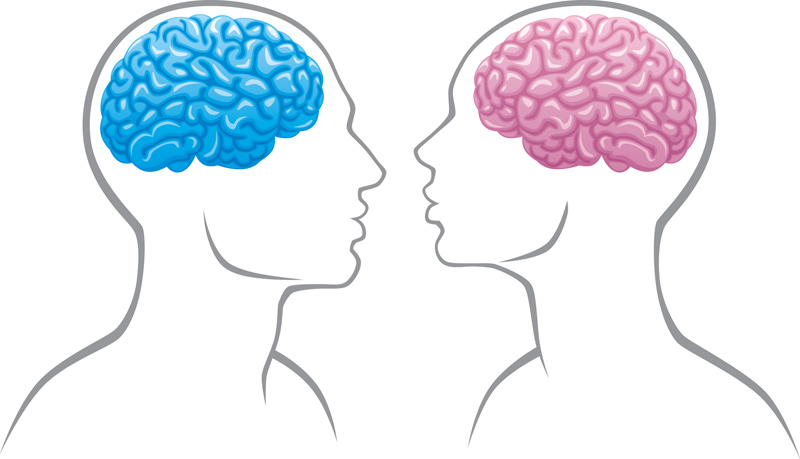
Some of the symptoms of Alzheimer’s in women include:
- Women may typically experience Alzheimer’s at an older age.
- They may have trouble using words, forming meaningful sentences, or understanding information.
- Changes in behavior and personality, such as fear, depression, or anger, are also common symptoms in both sexes.
- Symptoms such as forgetting new information and daily life may be more noticeable in women.
- Women with Alzheimer’s may have trouble carrying out daily tasks and making plans.
Symptoms of Alzheimer’s in men include:
- The symptoms of Alzheimer’s in men can be similar to the symptoms of the disease in women, although in some cases, there may be differences. Problems with short-term memory, changes in language ability, weakness and difficulty in determining current location or time, changes in behavior and personality including depression, timidity or anger, difficulties in performing daily tasks and decreased executive skills, difficulties in making decisions and evaluating situations, etc. are among the symptoms observed in men with AD.
Air Pollution Affects Dementia in Older Women
Research conducted on differences in Alzheimer’s in older men and women shows that older women living in areas with high pollution have patterns of brain shrinkage common in Alzheimer’s disease. In this study, researchers from the University of California examined fine particle pollution and found that inhaling high levels of air pollution is associated with shrinkage in brain areas vulnerable to Alzheimer’s disease.
Fine particle pollution includes microscopic particles of chemicals, smoke, dust and other pollutants suspended in the air. These particles are no larger than 2.5 micrometers and are 30 times smaller than the diameter of a human hair. “Shrinking brain volume is a major risk factor for dementia and Alzheimer’s disease, but whether air pollution causes changes in brain structure is still under investigation,” said Diana Younan, lead author of the study.
“Our study showed that women aged 70 to 80 who were exposed to higher levels of air pollution had a higher risk of developing brain changes associated with Alzheimer’s disease over a five-year period. Our research suggests that these toxins may disrupt brain structure or the connections in the brain’s nerve cell network that play a role in the progression of the disease,” he added. The study included 712 older women with an average age of 78 who were free of dementia at the start of the study. The women underwent MRI brain scans at the start of the study and five years later.
The researchers estimated the level of air pollution in the three years before the first brain scan based on the participants’ residential address. The researchers found that for every 3 μg/m3 increase in air pollution, the risk of Alzheimer’s disease increased by 24 percent. The researchers emphasize that more research is needed in this area. Do you know what to eat in air pollution?
Role of Nutrition and Environmental Factors in Preventing Alzheimer’s
Despite differences in Alzheimer’s in older men and women Studies on lifestyle changes that have been conducted so far show that a healthy diet plays an important role in controlling blood pressure, cholesterol and blood sugar, which are all risk factors for dementia. The recommendation of these studies is to choose a suitable lifestyle in order to reduce risk factors and prevent the disease.
Consuming certain foods can keep blood cholesterol in a favorable state. Ultimately, it prevents clogged arteries. Evidence shows that using the Mediterranean diet can reduce problems related to memory and thinking. The results of a new study published in January 2017 in the Journal of the American Academy of Neurology indicate that elderly people who used a Mediterranean diet for three years were more able to maintain their brain volume compared to people who did not use this type of diet.
The Mediterranean diet is rich in fruits, fresh vegetables, grains, legumes, fatty fish, and dairy products in sufficient quantities. It also uses red meat and poultry in small amounts. This style does not tend to consume sugar and saturated fat, and mainly uses olive oil. Research has shown that people who have used this diet have suffered less heart attacks. Continuous research shows that this type of diet has many health benefits due to its high antioxidant content – which is supplied to the body through fruits and vegetables.
Evidence also shows that a healthy diet including fish, fresh vegetables, spices, and nuts (almonds and hazelnuts) is good for the brain and preserves memory in old age. Our brain shrinks by one to two percent each year during old age. According to research, using the old Mediterranean style can slow this process. Having and maintaining a healthy weight is important, and it can be controlled by using the right food at each meal. For this purpose, a meal plan should be prepared in advance to consume healthy foods. It is important to know that prepared and processed foods lack healthy and fresh ingredients and can be problematic. Foods used for the elderly should be carefully prepared, taking into account their age and chronic diseases.
Concluding Remarks
In this article, we talked about differences in Alzheimer’s in older men and women. Awareness of the symptoms of Alzheimer’s in old age, youth, middle age, etc. and a correct understanding of its different stages is of great importance. By recognizing the symptoms and changes in behavior and memory earlier, appropriate actions can be taken to manage and support people with Alzheimer’s. Also, the support and empathy of family and close people play a very important role in facing the challenges of Alzheimer’s disease. The process of counseling and informing families can also help in creating a supportive and stable environment.
With more information about this disease and scientific advances in the field of diagnosing and improving memory, we can expect great improvements in the management and improvement of the quality of life of people with Alzheimer’s. We hope that with the help of research and medical advances, better days await people with this disease.

Frequently Asked Questions
Do Men’s Brains Shrink Faster Than Women’s?
A new study suggests that men’s brains shrink faster than women’s as they age. Brain volume declines are normal with age and are more severe in Alzheimer’s. However, women are twice as likely to develop Alzheimer’s as men, suggesting that factors other than the rate at which the brain shrinks play a role in the disease.
Is There a Connection Between Alzheimer’s and Urinary Incontinence?
The connection between Alzheimer’s and urinary incontinence is related to the functioning of the brain and nervous system. In Alzheimer’s disease, the parts of the brain responsible for controlling physical functions and voluntary behavior gradually deteriorate. These changes can lead to urinary incontinence.